
What is GHK-Cu?
A copper-binding tripeptide complex used in cellular and matrix-biology research.
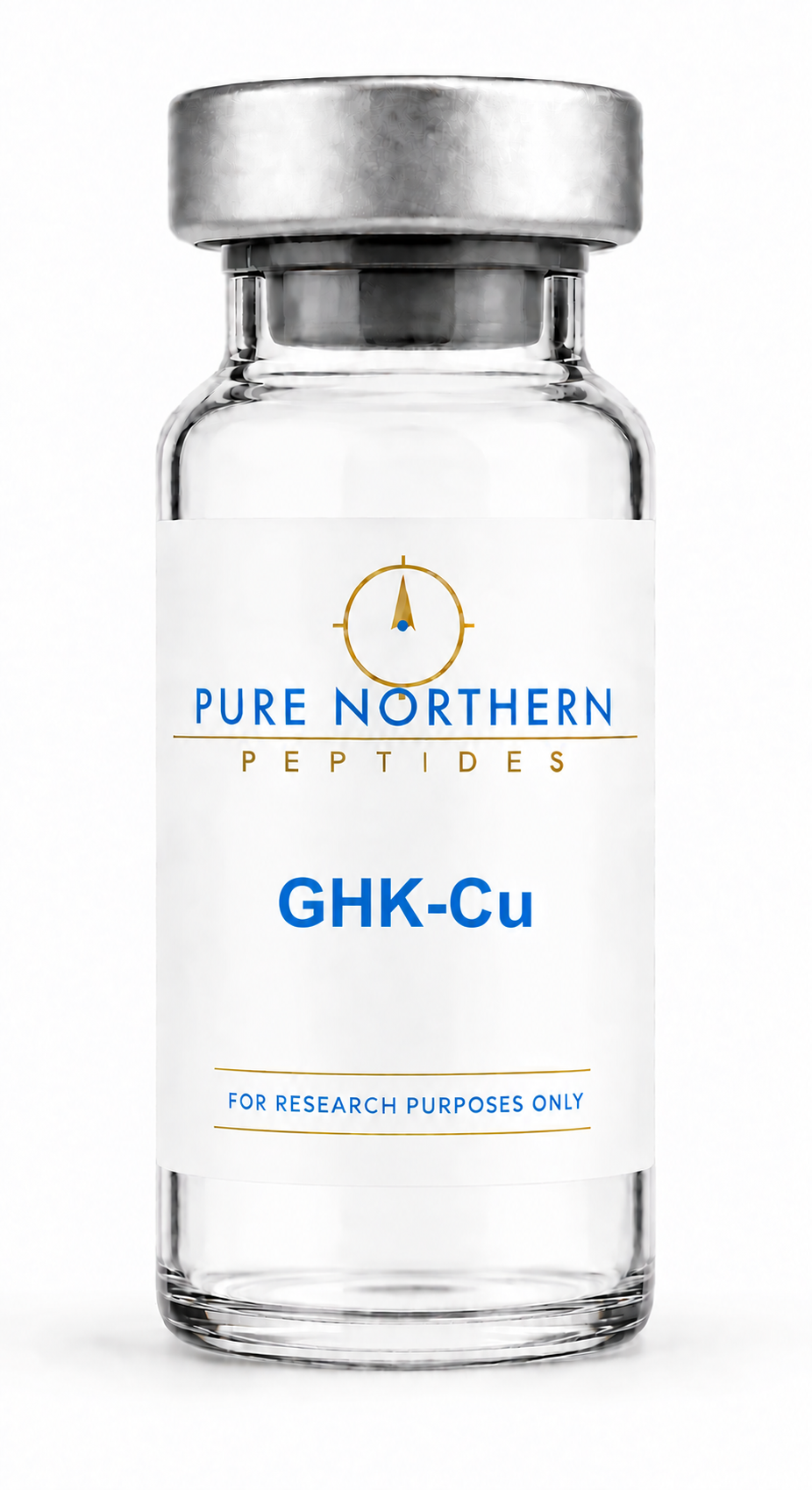 Research material
A copper-complexed tripeptide research material; Commerce controls the live listing.
Research material
GHK-Cu is a naturally occurring copper-binding tripeptide complex studied in extracellular-matrix, gene-expression, and cellular signalling models. Its copper coordination chemistry makes it distinct from uncomplexed peptides. It is supplied for qualified laboratory research only.
Select Strength
Live CAD price
$69.99
Selected size
GHK-Cu 50 mgQuantity
For research purposes only. Not for human or veterinary use.
Free shipping on orders over $250 CAD
Multi-unit savings: 3 units — 10% off · 5 units — 15% off · 10 units — 20% off. Promotional savings are subject to confirmation at checkout.
A copper-complexed tripeptide research material; Commerce controls the live listing.
Materials are intended strictly for laboratory and analytical research.
Contact research supportResearch examines how GHK-Cu may interact with copper-dependent processes, transcriptional networks, and extracellular-matrix-associated cell models. Reported findings are model-specific; they do not establish a consumer or clinical outcome.
Research is mainly biochemical, cellular, and preclinical.
A copper-binding tripeptide complex used in cellular and matrix-biology research.
Copper coordination is central to the compound’s chemistry and research questions.
Studies include biochemical and cellular models.